
Chop and Drop With Crop Waste
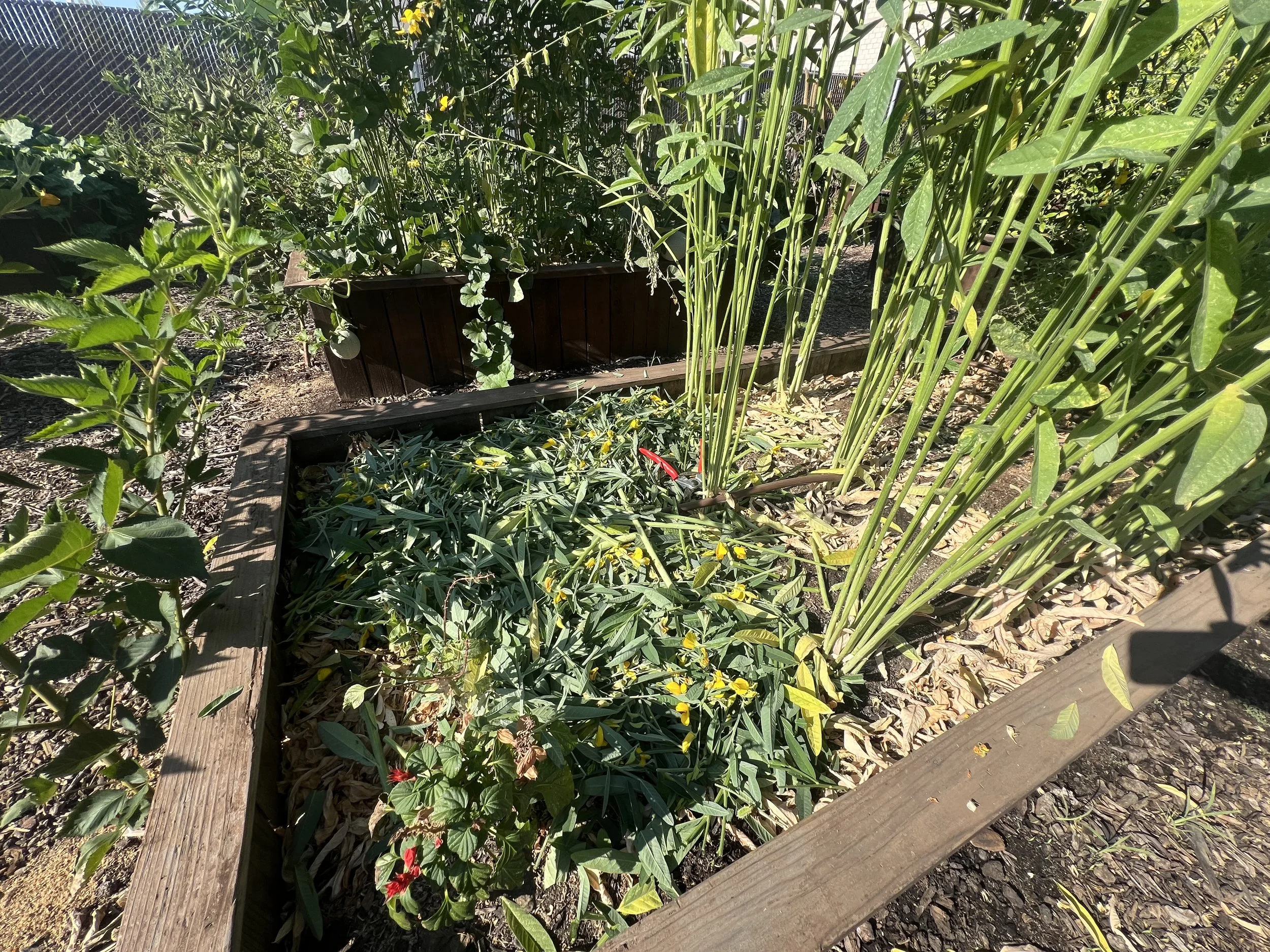
It’s such a foreign concept to many growers but the idea of leaving crop residues in place is gaining traction. This is good for a few different reasons.
One reason is that it is free mulch. Isn’t it nice that you don’t have to go to the store to buy the bagged stuff that is probably from hundreds if not thousands of miles away from you? Cutting the crop residue up into small pieces let’s you create a more uniform looking mulch that is entirely free. I love the free stuff.
Another reason to utilize crop waste is because it returns some nutrients back to the soil the crop took in the first place. You’re probably not going to capture everything but that would happen regardless if you composted the crop waste or used it as mulch. You’re going to get a percentage back as fungi and bacteria break it down into smaller parts.
Another great reason is to chop and drop garden waste is that it keeps the soil moisture high. This goes for any material that is placed on top of the soil. The sunlight and wind are going to get blocked or reflected, ensuring your soil doesn’t lose the critical moisture it needs to thrive. This keeps the soil foodweb alive and your plants can also grow feeder roots right up to the surface of the soil.
Yet another reason is to do this is that it keeps soil temperatures low. I believe that even if you don’t have water in all areas of your soil, just having it covered will result in better plant health. Plants would much rather grow in soil with 85 degree temperatures than 105.
One of the last reasons you should use your crop waste as mulch is that it feeds the fungi over time. This is especially helpful in areas with alkaline conditions because fungal populations tend to acidify the soil, which brings other nutrients into better availability for your plants.
So, how do we chop and drop the crop waste?
This part does take some time, but I find it to be a meditative process. I use hand clippers to cut crops into pieces as small as possible. It can tire out your hand, especially if you have woodier stems, but I just take breaks when I need to rest my hand muscles.
I tried to cut crops at their base just below the soil level, so they won’t grow back. Then, I usually flip the crop upside down so that I can start cutting the pieces from the bottom up. I find that cutting this way allows me to cut the different branches into straight pieces, ensuring I can have a mulch that lays relatively flat when I’m all done.
I will do this with almost anything I can get my hands on. If you’re worried about plants growing back from stems, then let them dry out a few days before you use them as mulch. I grow in an arid climate, so I don’t have this problem.
I’ll also use other plants in the area for crop mulch. Tree and shrub clippings are abundant for me so I will do the same thing with those, too.
I believe it’s important to cut the pieces into smaller ones because it exposes the inner parts of the stems and branches to bacteria and fungi. I believe this helps hasten the decomposition process. I also think it renders any kind of allelopathy useless at that point.
You can also add compost either before or after you add the crop waste. Some growers chop and drop the crop waste and then add the compost on top. I prefer to cut the plants out, add compost, then add the crop waste back as a mulch. I like to do it this way so that the compost doesn’t dry out from being the top layer and being exposed to sun and wind.
If you plan this with cover crops, then you can add a serious mulch layer that practically eliminates ever having to buy mulch. This is one of the most sustainable growing practices because you’re not bringing in resources from somewhere else. You’re growing the mulch yourself and not letting it leave your land.
I did this with Sunn hemp last summer and it is still lasting well into this year’s Fall season.
Some great cover crops for creating your own mulch are:
Sunn hemp (Crotolaria juncea)
Sudangrass (Sorghum bicolor)
Fava beans (Vicium faba)
Buckwheat (Fagopyrum esculentum)
In reality, you can use anything around you. The idea is to cut it into smaller pieces so it lays flat and close to the soil.
