
Hugelkultur Works in the Desert
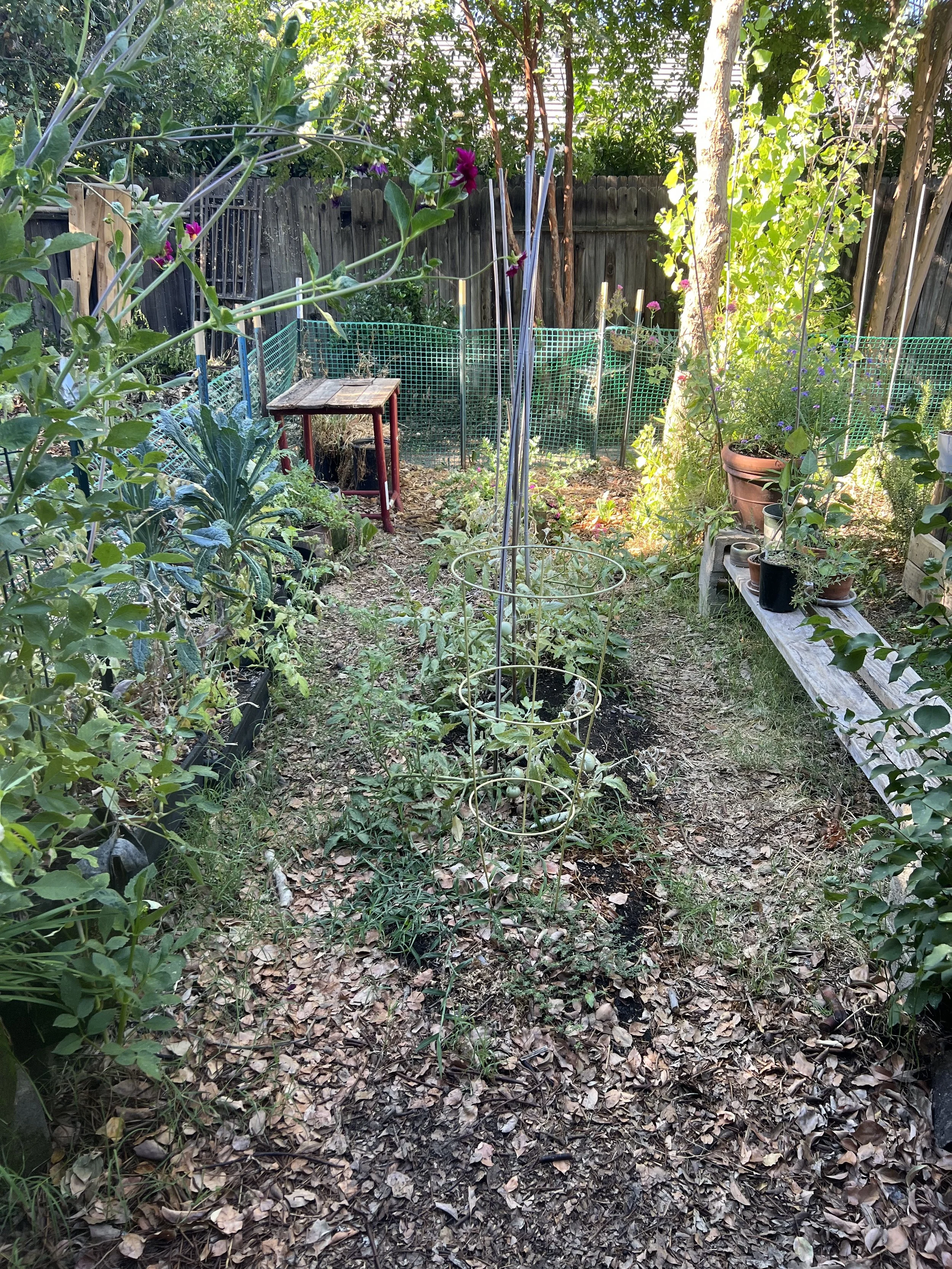
By now, you might have seen that digging or tilling the soil is pretty bad for it. It disrupts the fungal network, destroys earthworm tunnels, and oxidizes carbon into CO2. How do we prepare the soil for a new garden or for a new crop?
We can use the method of hugelkultur, which is more or less using wood, garden waste, manure and compost to create a layered or lasagna garden. Most people bury the wood, which does create some destruction due to the digging. We thought, could you just pile on wood on top of the soil with layers of compost and manure in between to achieve the same outcome?
We created this bed in Fall 2025. We took what we had available around us and got started. We have quite a few trees in our yard so we don’t usually have a lack of biomass. What’s even more interesting is that most of this bed was created from Camphor Laurel (Cinnamomum camphora) branches, twigs and leaves. Supposedly this tree is allelopathic, meaning that it’s leaves and twigs are toxic to other plants and will not let anything grow.
We haven’t found that to be the case. Many things grow right under our camphor tree. The allelopathy argument is grossly overstated. What’s probably happening is that camphor and other trees like eucalyptus create a lot of biomass under them—a thick mulch—which combats competition from other plants. Remove the mulch and see what pops up around these trees.
Anyways, we layered large camphor branches with smaller ones with some chicken manure and compost, doing small layers at a time until it got a couple feet tall. We planted cauliflower in the fall and it did really well. We then planted these tomatoes this spring.
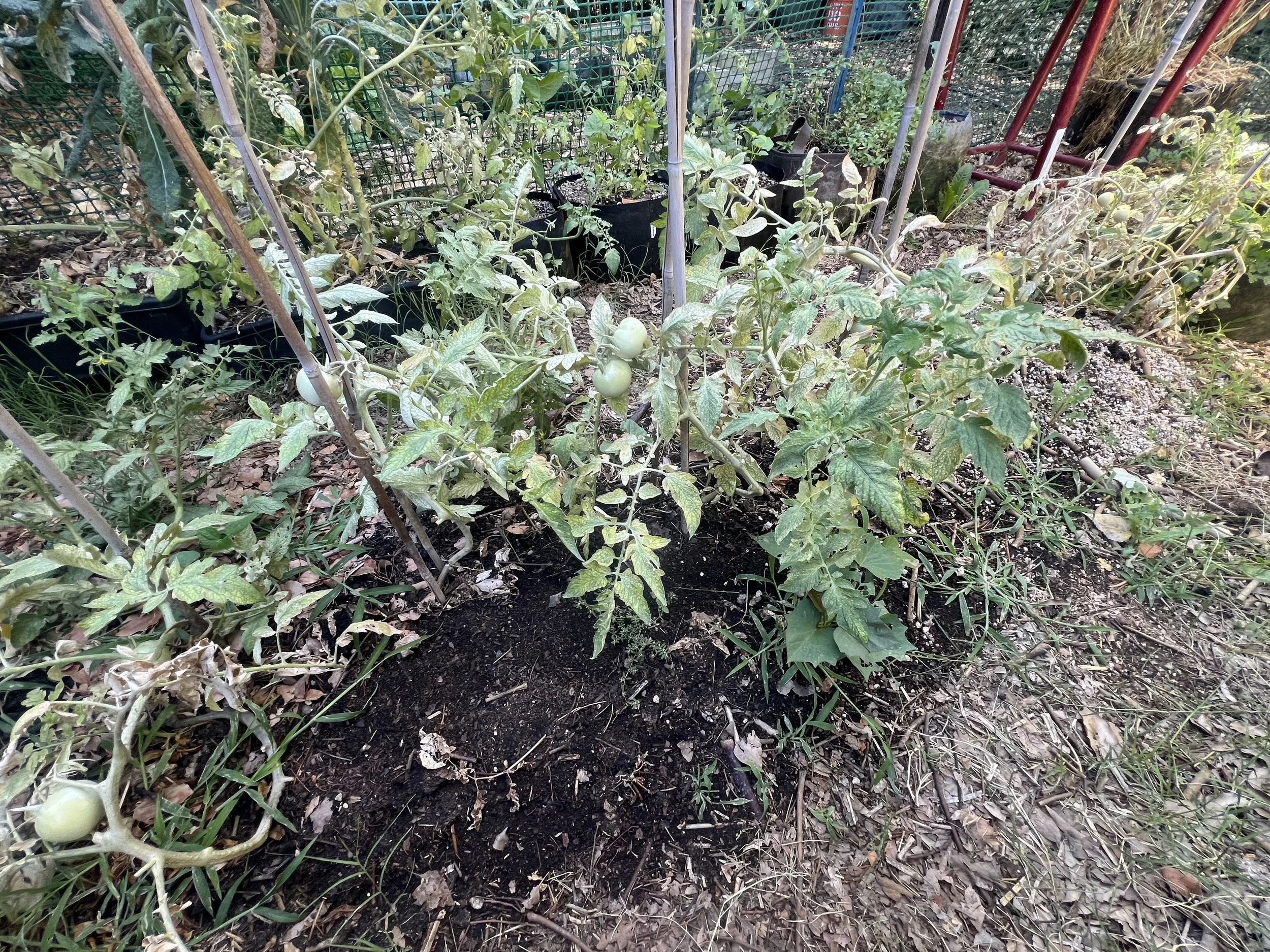
The tomatoes grew reasonably well until recently but it’s nothing to do with the hugelkultur. All of our tomatoes have been getting hit hard with spider mites. Some sources say that spider mites are due to water stress and that could be what’s going on here. We didn’t get around to installing a drip line on this bed so we’ve been hand-watering every day. The hand-watering just doesn’t deliver water the same way a drip line can on a pulse schedule. So, the tomatoes are probably water stressed.
That brings me to this point: hugelkultur works in desert or arid climates if you provide water. I’ve seen a lot of people state that it doesn’t work in our kind of climate but that’s because they didn’t have their irrigation dialed in or they don’t have access to water at all. If you don’t have water in an arid place, I’m not sure how you’re going to grow much of anything besides the native vegetation. You need water to grow food crops in desert climates.
You can also see that there’s grass and weeds growing in our garden. Honestly, I don’t really care about this. I think weeds are more of a psychological problem than anything. Plants want to cover the Earth and we often just get in the way of natural processes. I’ve had to reteach myself that weeds aren’t really a big deal.
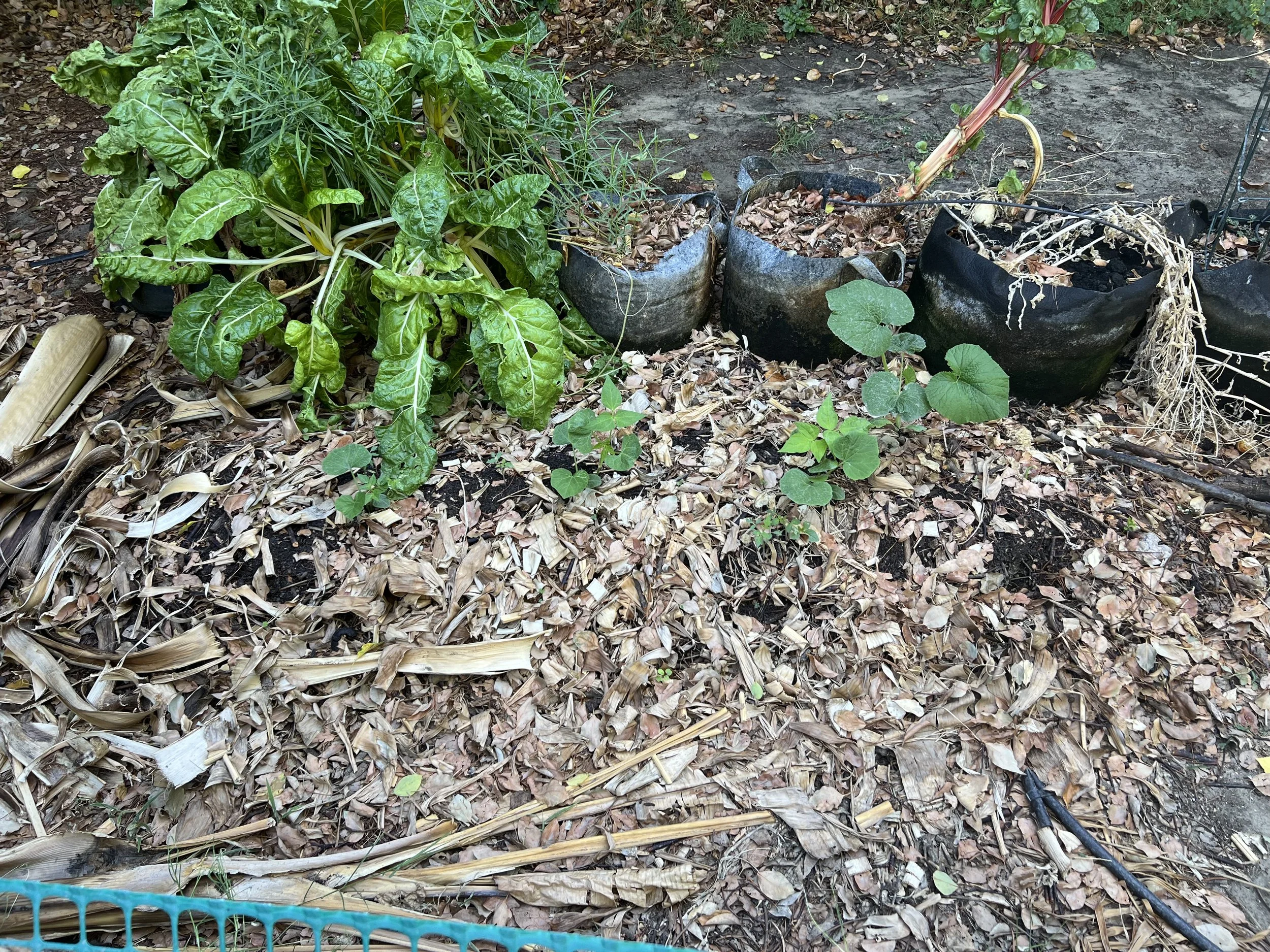
Here’s another bed I just recently created. Same process. I took large branches and twigs and layered them between layers of chicken manure and compost. Leaves and all. Waste not, want not.
I planted a winter squash—Koginut squash from Row 7—along with some beans to fix some more nitrogen. So far, so good. I’m also hand-watering this bed but ideally I would have drip irrigation set up on this bed, too. I haven’t had any pest issues yet but I’m waiting to see if we get squash bugs. They are usually around here early summer but this was planted later so I think they just haven’t found them yet.
Don’t mind the fabric pots in the picture. We are in the process of getting rid of all of these.
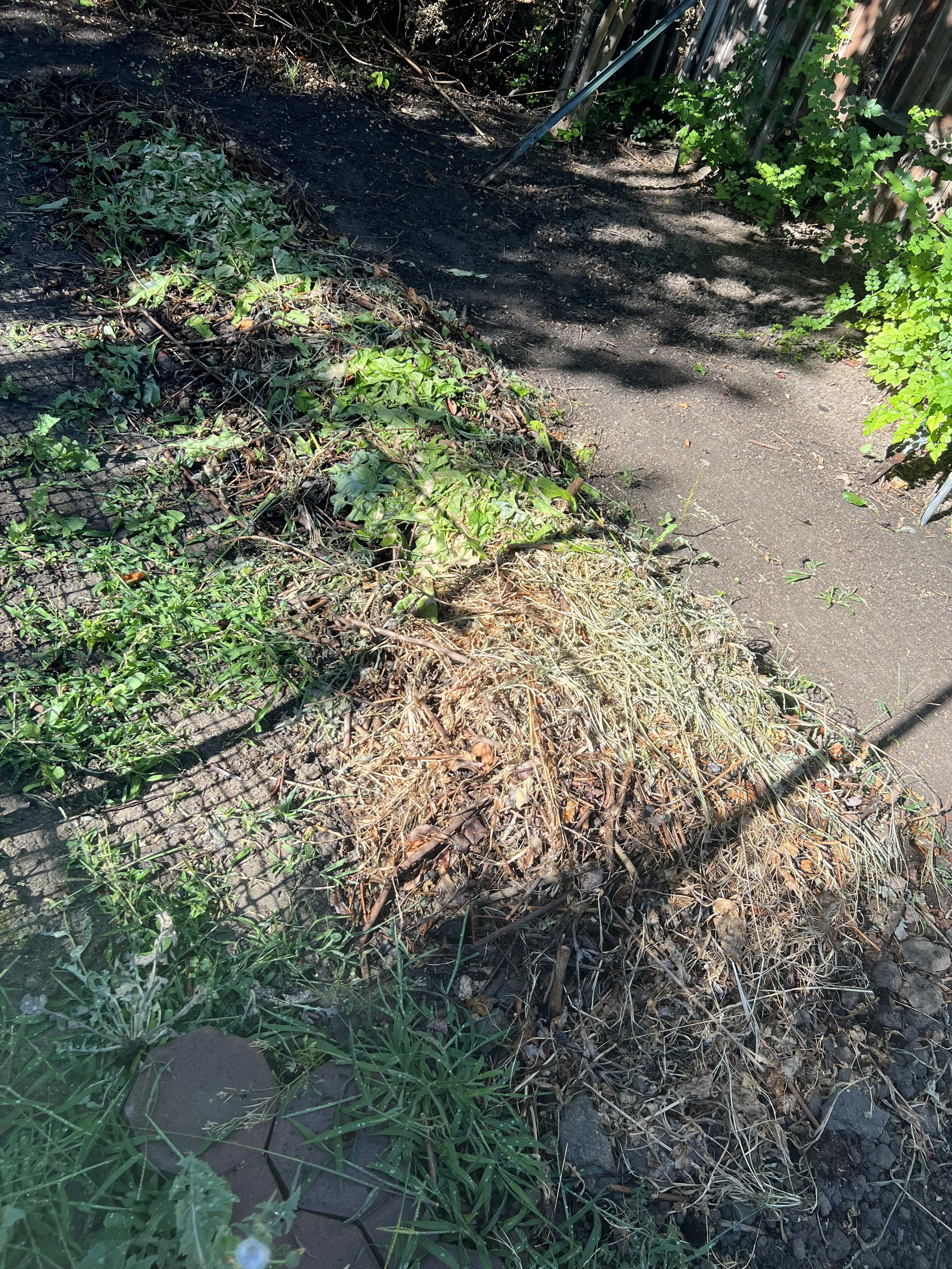
Here’s a bed I am currently building up. As you can see, I put whatever I can find in there. I don’t care if weeds have seeds and I don’t care what kind of branches I am putting in there. If things grow or resprout, all I have to do is cut it down. It’s really a much more relaxed way of growing. I’m not fighting Nature, I’m simply working with the processes that are supposed to happen. Once I get this layer thick enough, I will add some manure and compost and do it again until the bed is 3-4 feet tall.
The important part for us in hot, desert climate is to add that final mulch layer on top. I don’t want any exposed manure or compost that will get dried out by the sun.
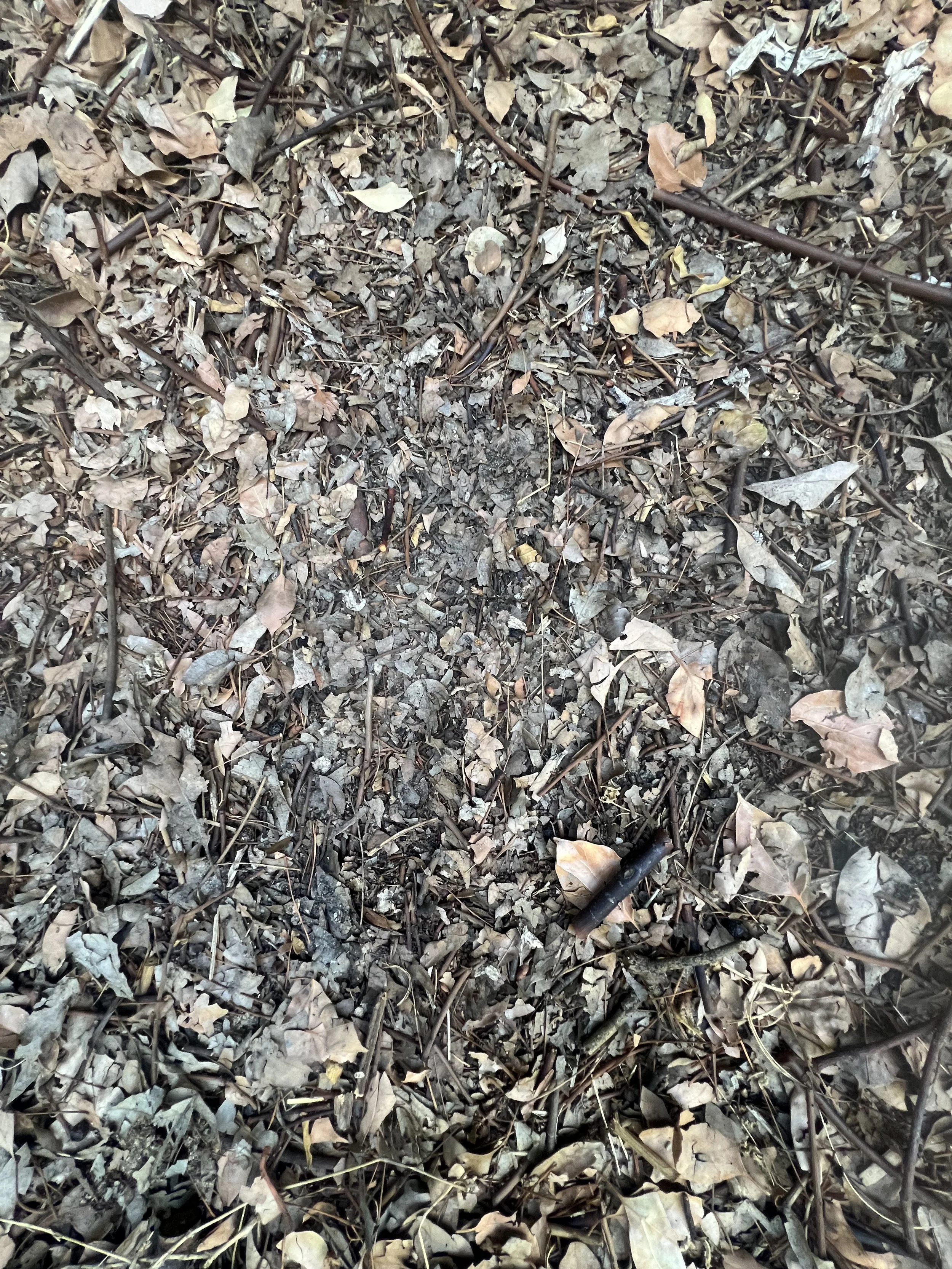
As we walk on the biomass, it breaks into smaller pieces. I imagine bacteria and fungi are also breaking these pieces down into smaller bits. I also take the time to cut branches into small pieces so that there is more surface area for fungi and bacteria to get into the wood to break it down. I don’t really leave any branches intact. They are always getting cut into small pieces.
In conclusion, I believe that hugelkultur does work in hot, desert, and arid climates. You just have to ensure you water! You don’t even have to water a lot. Using a pulse schedule is the best way to get the most out of a system like this. Check out this post and this post on how to implement pulse watering.
Let me know if you live in a desert climate and have gotten hugelkultur to work for you!
