
Making a Complete Organic Fertilizer (COF)
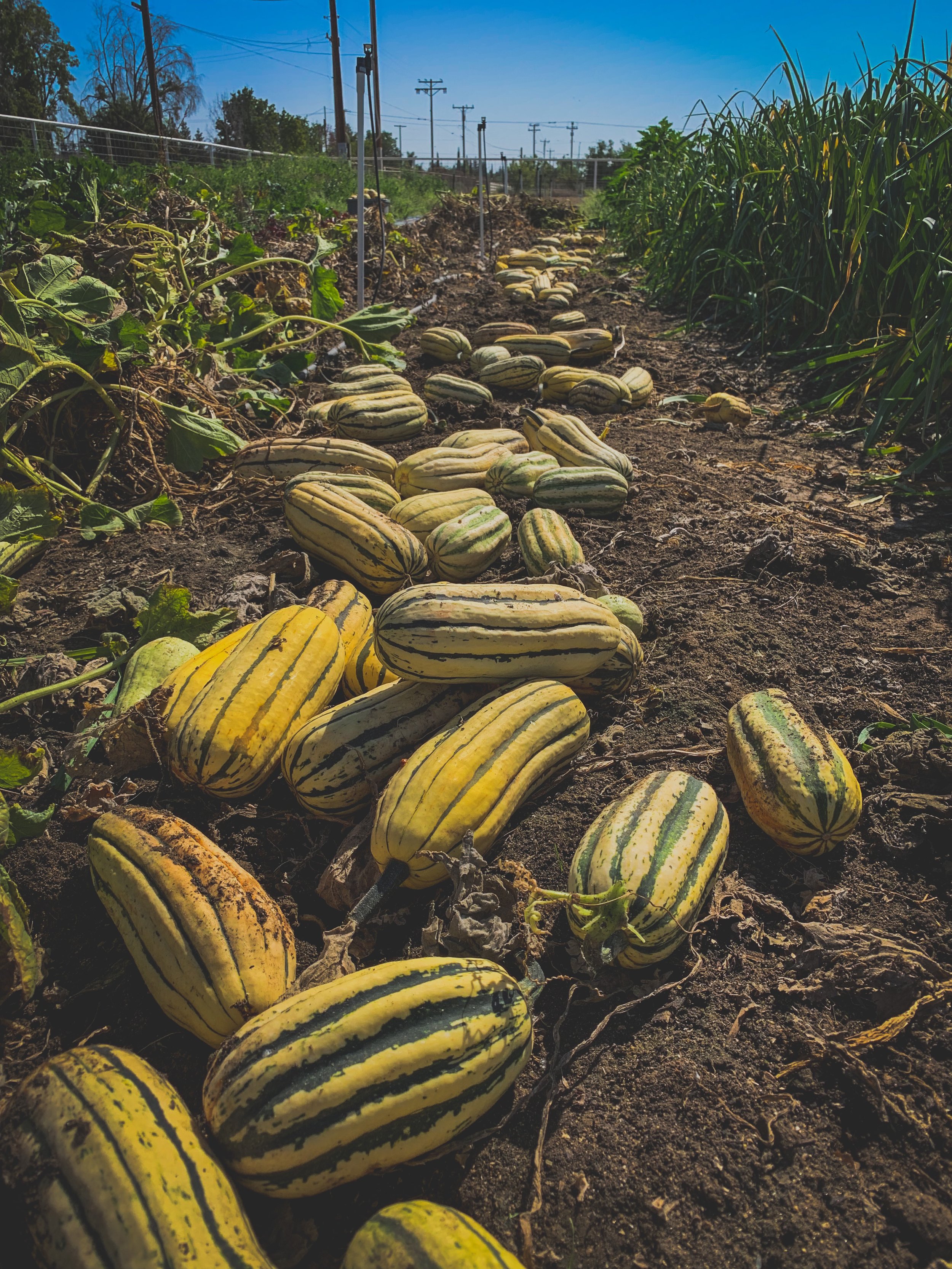
As I have said before, I am not completely against synthetic fertilizers. I think the fear around them is overblown. I do think you can over apply them more easily and they don’t really contribute at all to building soil. That’s why organic is always going to be better. It feeds the soil in the long run and makes it healthier every year. The delicata squash above was grown with a complete organic fertilizer when we had our farm.
Years ago, I read The Intelligent Gardener by Steve Solomon. He mentioned Dr. William Albrecht a lot and this is where I got introduced to soil mineral balancing. Solomon states that the key to nutrient-dense food is to add macro and micro nutrients back to the soil via a complete organic fertilizer. I think this is wise because organic fertilizers tend to have a wide spectrum of nutrients.
Here, I am going to tweak his recipe a bit. In the organic gardening world, people use animal byproducts and slaughterhouse products. I don’t really like to promote the use of these things because it gives the CAFO industry another way to make money. I’d rather just use stuff made from plants and rocks.
You can usually find all of this stuff online but feel free to substitute something if you can’t find it.
Here’s my adapted version of the complete organic fertilizer:
2 cup alfalfa meal
1 cup flaxseed meal
1 cup neem seed meal
1 cup kelp meal
½ cup basalt dust
½ cup glacial dust
½ cup Archipelago bat guano or soft rock phosphate
¼ cup ag lime
¼ cup gypsum
¼ cup dolomite lime
1 tbsp humic acids
1 tbsp brewers yeast
1 tbsp turbinado sugar
1 tsp ag sulfur
1 tsp iron sulfate
1 tsp copper sulfate
1 tsp manganese sulfate
1 tsp zinc sulfate
1 tsp borax
Once this is all mixed up, you then apply 2.5 cups of this mix to 10 square feet of garden space. For transplants, you can add 2-4 tbsp per planting hole.
Additionally, you can side-dress longer term vegetables like tomatoes, cucumbers, zucchini and melons with another 2-4 tbsp around the plant once every 3-4 weeks. Make sure to water this in really well.
This should result in really nutrient-dense vegetables that taste great, too. If you want the most nutrition from your garden, then you probably won’t spending your money on this kind of fertilizer.
